
Beauty is in the eye of the beholder.
And nowhere is that more true than on an African safari.
Most travellers arrive dreaming of the Big Five: the lion, leopard, elephant, rhino and buffalo. They are magnificent, iconic and, understandably, high on almost every safari wish list.
But Africa has another five worth getting excited about.
They are less glamorous. A little more awkward. Sometimes downright strange-looking.
And they have been affectionately, and rather unfairly, given the name Africa's Ugly Five.
Meet the hyena, warthog, marabou stork, wildebeest and vulture.
The name is a playful nod to the Big Five, rather than a serious judgement on their looks. In fact, spend a little time watching these animals in the wild, and you may find yourself wondering how they ever ended up on the list.
Beneath the crooked smiles, bald heads, unusual silhouettes, and questionable hairstyles are some of the most fascinating characters in African wildlife.
And, perhaps more importantly, they are doing some very important work.
- They clean up.
- They dig.
- They graze.
- They recycle.
- They fertilise.
- They keep ecosystems moving.
So, if you're heading out on safari in Kenya, Tanzania or elsewhere in Africa, don't just keep your eyes peeled for the animals that make the postcards.
Keep an eye out for the ones that make the stories.
So, what are the Ugly Five?
The Ugly Five of Africa are a light-hearted safari grouping made up of the spotted hyena, warthog, wildebeest, vulture and marabou stork. They may not have the instant glamour of a leopard or the sheer presence of an elephant, but each has remarkable adaptations and an important place within the ecosystem.
And once you know a little more about them, you may never look at them quite the same way again.
Let's meet them.
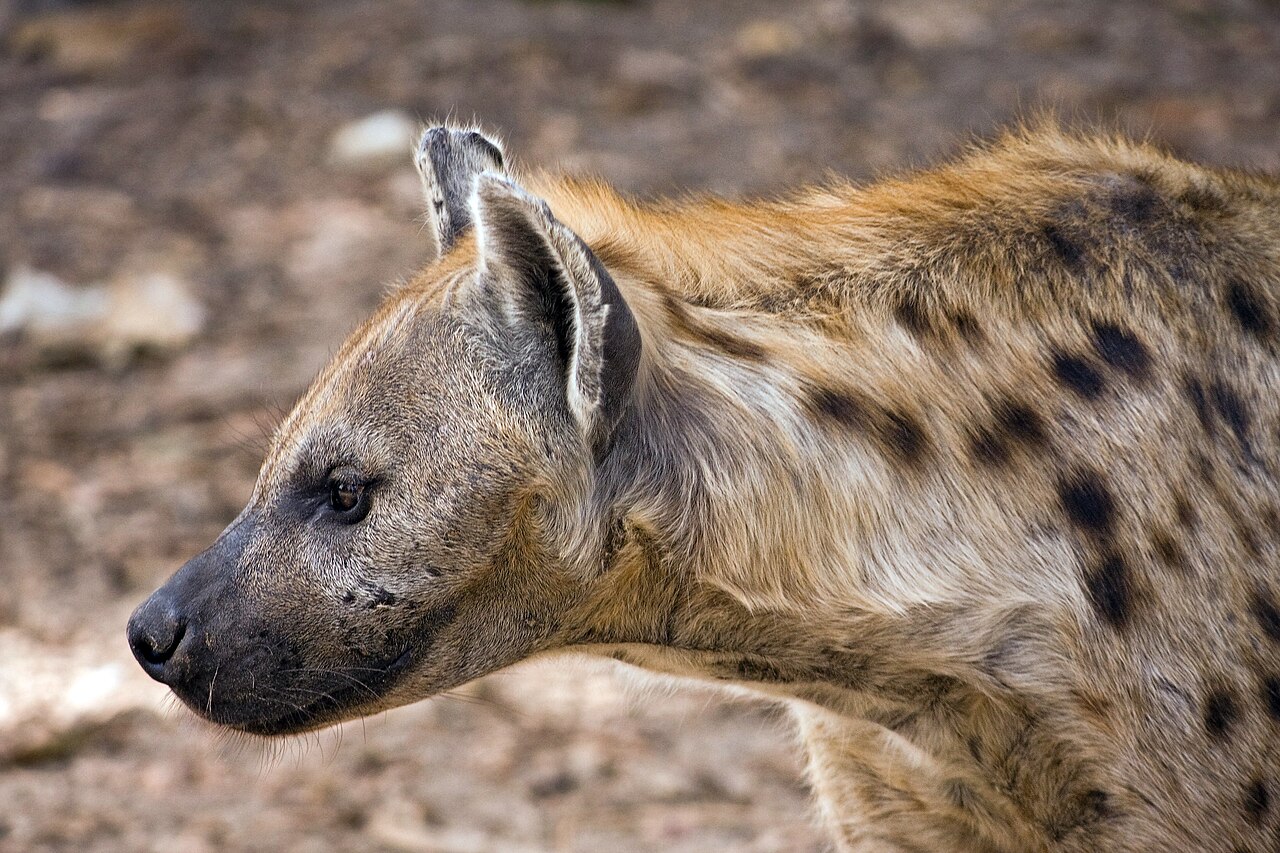
1. The Hyena
The misunderstood comedian of the African bush
The hyena is an animal that has suffered the most from bad publicity.
With its sloping back, powerful shoulders, strong jaws, and famously eerie “laugh”, the spotted hyena isn't exactly what most people imagine when they think of beautiful African wildlife.
But there is much more to a hyena than its appearance, or its reputation.
For a start, hyenas are incredibly capable predators. They are also highly social animals, living in complex clans with their own hierarchies and relationships. And while they are famous for scavenging, they are also very capable hunters.
Then there are those jaws.
Hyenas have extraordinarily powerful jaws and teeth that allow them to consume parts of a carcass that many other predators leave behind, including bones. In doing so, they help recycle nutrients back into the ecosystem.
That famous “laugh” is not really laughter at all. Hyenas use a variety of vocalisations to communicate, and the familiar high-pitched sound is one of the noises that makes an evening game drive particularly memorable.
There is something wonderfully African about hearing that sound somewhere in the darkness.
You may not see the hyena immediately.
But you'll know she's there.
Why we love them
Because the hyena reminds us not to believe everything we hear.
Misunderstood? Absolutely.
Unimportant? Never.
Safari tip: Keep an eye out for hyenas around dusk and dawn, when they can be particularly active. And if your guide stops the vehicle because a hyena is sitting quietly nearby, don't assume nothing is happening. Sometimes the quietest sightings become the most interesting ones.

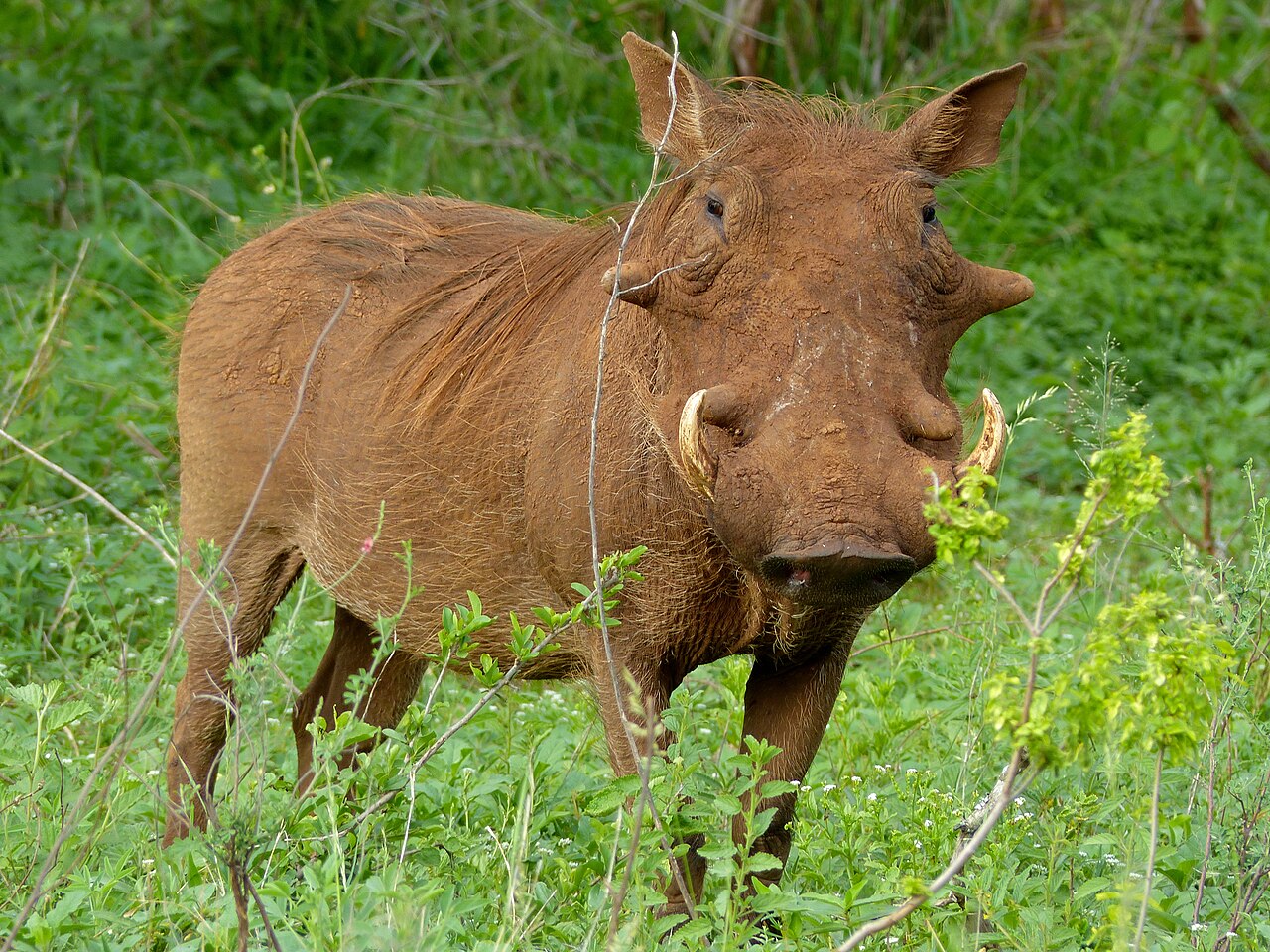
2. The Warthog
Africa's little tank with a tail antenna
Few animals can make an entire safari vehicle smile quite like a warthog.
With its oversized head, facial “warts”, curved tusks, coarse hair, and sturdy body, the warthog looks as though nature decided to have a little fun.
And then there's the tail.
When startled, a warthog can sprint away with its tail held straight up in the air.
Like a tiny radio antenna.
It is difficult not to laugh.
But beneath that wonderfully comical appearance is an animal perfectly adapted to life on the African plains.
Warthogs use their strong snouts and tusks to dig for roots, bulbs and other food. Their digging turns over and aerates the soil, while abandoned burrows can provide shelter for other animals.
They are also surprisingly fast when they need to be.
And those tusks aren't just decoration. They can be used for defence and in encounters with other warthogs.
Perhaps the best part of seeing one on safari is that you rarely have to wait long for some personality.
A warthog grazing quietly? Charming.
A warthog trotting across the road with its tail in the air? Instant safari highlight.
Why we love them
Because they are proof that wildlife doesn't have to be graceful to be fascinating.
Safari tip: Watch for warthogs in open grassland and around areas where they can forage. You may also see them kneeling on their front legs while feeding — one of their wonderfully distinctive behaviours.

3. The Marabou Stork
The undertaker with an important job
Now we come to the member of the Ugly Five that perhaps embraces the title most enthusiastically.
The marabou stork.
Long legs. Dark wings. A bald head. A large bill. And a rather impressive throat pouch.
Standing around a waterhole, a marabou stork can look slightly like it has wandered in from another, considerably more gothic, story.
But that unusual appearance comes with a purpose.
The marabou stork is an opportunistic feeder and scavenger, often making use of food remains and waste around waterholes and areas where animals gather. Its bare head and neck are also well suited to its feeding habits.
And while the marabou may not be the first bird you think of when you picture a beautiful African safari, watching one move across the plains can be surprisingly captivating.
There is something rather elegant about a bird that has made being unconventional look effortless.
Why we love them
Because Africa doesn't need every creature to be beautiful in the conventional sense.
Some simply need to be brilliantly adapted to their job.
And the marabou stork certainly is.
Safari tip: Look for marabou storks around waterholes, wetlands, open grasslands, and areas where other wildlife congregates.
4. The Wildebeest
The awkward-looking icon of the Great Migration
The wildebeest may be the greatest example of an animal that looks as though it was assembled from spare parts.
The head of one animal. The mane of another. A beard. Long legs. A powerful body.
And somehow, it all works. Very well, actually.
Because the wildebeest is one of the great characters of the African savannah, and the star of one of the world's most extraordinary wildlife spectacles.
The Great Migration.
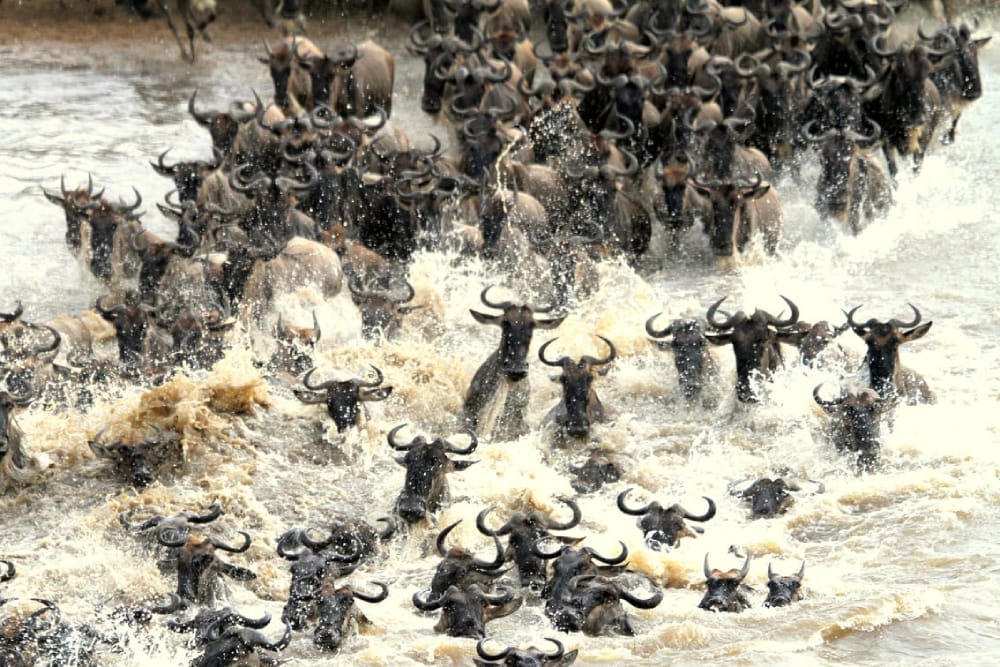
Every year, enormous herds of wildebeest move through the grasslands of the Serengeti and Maasai Mara ecosystem, following rainfall, fresh grazing and water.
For many travellers, witnessing the migration in Kenya or Tanzania is a lifelong dream.
But the wildebeest's importance goes far beyond the spectacular photographs.
As they graze, their movements influence the grasslands, while their dung returns nutrients to the soil. Their sheer numbers also support an entire web of predators and scavengers.
And then there are the river crossings.
Thousands of wildebeest gathering at the edge of the Mara River. Hesitating. Pushing forward. Turning back. Trying again.
It is chaotic, dramatic, and completely unforgettable.
And suddenly, you understand how an animal that looks so wonderfully awkward became one of Africa's greatest icons.
Why we love them
Because they remind us that beauty isn't always about elegance.
Sometimes beauty is about movement. About survival. About thousands of animals following an ancient rhythm written into the landscape.
Safari tip: If you're planning a Great Migration safari, remember that the migration is a natural phenomenon rather than a perfectly scheduled event. Timing and animal movements can vary with rainfall and conditions, so the experience is about following the ecosystem rather than simply following a calendar.

5. The Vulture
The superhero nobody thinks to thank
And finally, we have the vulture.
Bald head. Hunched shoulders. Sharp beak. A reputation for appearing whenever something has died.
It is easy to see why vultures have become the villains of cartoons.
But in the real African wilderness, they are much closer to superheroes.
Vultures are nature's clean-up crew.
They feed on carrion and help remove animal remains from the environment, reducing the amount of decaying material that could otherwise contribute to the spread of pathogens.
Their stomachs are remarkably adapted to a scavenging lifestyle, allowing them to process food that would be dangerous for many other animals.
They also have one of the most fascinating relationships with other scavengers on the savannah.
When predators make a kill, vultures may gather from above, waiting for their opportunity.
What can look like a rather grim gathering is actually an important part of the ecosystem at work.
Nature's recycling system. Efficient. Unsentimental. Necessary.
So the next time you see vultures circling overhead on safari, don't just think: “Something has died.”
Think: “The clean-up crew has arrived.”
Why we love them
Because few animals are better at reminding us that even the least glamorous jobs are essential.
Why the Ugly Five Matter
Perhaps that's what makes the Ugly Five so fascinating.
They aren't just five funny-looking animals that safari guides point out for a laugh.
They represent something much bigger.
- The hyena helps process what other predators leave behind.
- The warthog digs and turns the soil.
- The marabou stork helps clean up around the places where wildlife gathers.
- The wildebeest shapes the grasslands through its grazing and movement.
- The vulture helps remove carcasses from the landscape.
Together, they are part of the enormous, interconnected system that makes Africa's wilderness work.
And that is one of the beautiful things about safari.
The more you look, the more you realise that the animals you initially overlooked often have the most interesting stories.
Beyond the Big Five
There is nothing wrong with wanting to see the Big Five. Of course there isn't.
Watching a lion yawn in the early morning light, finding a leopard hidden in the branches of a tree, or standing beside an elephant herd is the stuff of safari dreams.
But Africa is so much more than five animals.
There are giraffes and cheetahs. Zebras and hippos. Wild dogs and jackals. Ostriches and eagles. Tiny dung beetles doing extraordinary work.
And, of course, the wonderfully strange members of the Ugly Five.
A great safari isn't simply about collecting sightings.
It is about learning to notice. To slow down. To ask your guide, “What is that?” To spend ten minutes watching something you almost drove past.
Because sometimes the animal that wasn't on your list becomes the one you remember most.
So, Are They Really Ugly?
We don't think so.
Perhaps unconventional is a better word. Or characterful. Or magnificently adapted.
Because once you understand what you're looking at, it becomes rather difficult to call any wild animal ugly.
- The hyena's strange laugh has a story.
- The warthog's funny face has a purpose.
- The marabou stork's unusual appearance makes sense.
- The wildebeest's mismatched body carries it across thousands of kilometres.
- And the vulture's bald head is perfectly suited to the job it has to do.
Beauty in the wild is rarely just about appearance.
Sometimes it is about purpose. Sometimes it is about survival. And sometimes it is simply about being wonderfully, unapologetically yourself.
The Next Time You're on Safari…
Don't just ask your guide: “Where are the lions?”
Ask: “What else should we be looking for?”
Because somewhere out there, a warthog may be trotting across the road with its tail in the air. A hyena may be watching quietly from the shade. A marabou stork may be standing beside a waterhole, looking like an old gentleman who has seen absolutely everything. A vulture may be circling high above the plains. And thousands of wildebeest may be moving across the horizon.
They may not be the animals you first came to Africa to see.
But they may just become the ones you never forget.
Because in Africa, beauty has many faces.
And we think they're all worth meeting.
Planning your African safari?
Whether you're dreaming of the Great Migration in Kenya and Tanzania, a classic Kenya safari, a wildlife escape in East Africa, or exploring further into the continent, we'll help you look beyond the obvious and experience Africa in all its wonderfully wild detail.
Let's go somewhere, anywhere, everywhere.
Explore more with Shishi Footsteps:
- Explore Africa — Discover the wildlife, landscapes, activities, and experiences that make Africa extraordinary.
- Safari Itineraries — Find inspiration for your next African adventure.
- Not sure where to go? — Let us help you find the part of Africa that feels like yours.
